Mandolines are amazing… right up until they’re not. They’re one of the fastest ways to get paper-thin cucumbers, perfect potato chips, or even onion slices—but they’ll also bite you the second you get lazy. The good news: once you follow a few simple rules, you can use a mandoline with zero blood drama and actually enjoy how fast it is.
Disclosure: Some links may be affiliate links. As an Amazon Associate I earn from qualifying purchases.
Why mandoline cuts happen (so you can avoid them)
Most accidents come from:
- Going too fast at the end when the vegetable gets short
- Skipping protection (hand guard or glove) “just for one slice”
- Unstable mandoline setup that slips mid-slice
- Wrong angle or using too much force
The fix is mostly setup + habits, not skill.
Step 1: Set up your mandoline so it can’t move
Before you even touch food:
✅ Make it stable
- If it has non-slip feet, still place it on a damp towel or silicone mat.
- If it hooks over a bowl, make sure the bowl is heavy and stable.
- Avoid slicing on a wobbly cutting board.
Personal rule: if the mandoline shifts even 1 inch during the first test slice, I stop and reset.
Step 2: Choose your thickness (simple guide that actually works)
Most mandolines have a dial or settings. Here’s a practical cheat sheet:
Thin (paper thin)
Best for: cucumbers, onions, radishes, quick pickles
Tip: great texture, but easy to overdo for potatoes (can get fragile)
Medium
Best for: everyday salads, sautéed onions/peppers, zucchini rounds
Tip: the “safe default” thickness for most vegetables
Thick
Best for: gratins, baked potato slices, eggplant for roasting
Tip: thick slices cook more evenly and are harder to burn
Extra-thin (chip level)
Best for: homemade chips
Tip: soak potatoes briefly and dry well for better crisping (and less sticking)
Pro note: If you’re unsure, start thicker. You can always go thinner—going too thin first usually makes a mess.
Step 3: Pick your safety method (use at least one—ideally two)
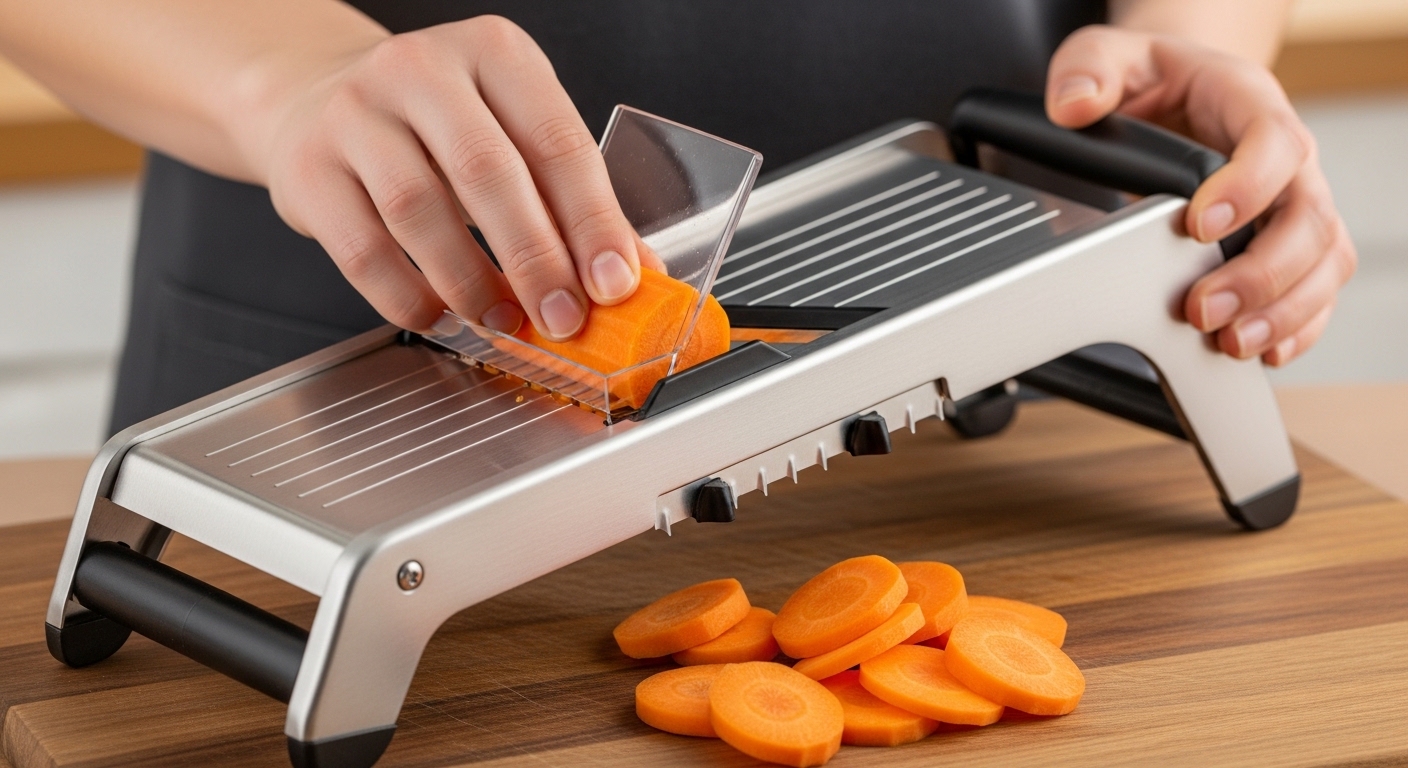
Option A: Use the hand guard (good, but not perfect)
Most mandolines come with a guard that grips the food.
Works best for:
- Potatoes
- Zucchini
- Cucumber
- Anything firm and flat-ish
Where it fails:
- Skinny items (carrots, small radishes)
- Short leftover pieces that don’t grip well
Option B: Wear a cut-resistant glove (my #1 recommendation)
A cut-resistant glove is the closest thing to “confidence mode.”
Glove tips that actually matter:
- Wear it on your slicing hand (the one holding the food).
- Consider a nitrile glove over it if handling wet/juicy food (easier cleanup, better grip).
- Gloves are cut-resistant, not magic—still don’t press your fingertips into the blade.
If you do only one safety thing, do the glove.
Step 4: Use the right technique (fast, clean slices without slipping)
✅ Keep food flat and stable
- Cut one side flat first (especially onions, potatoes, eggplant).
- Flat surface = less rolling = fewer accidents.
✅ Use light pressure, not force
If you’re forcing it, something’s off:
- blade is dull
- thickness is too thin for the ingredient
- angle is wrong
✅ Use long, smooth strokes
Don’t do tiny “sawing” movements. Smooth passes give cleaner slices and fewer slips.
✅ Stop before you think you need to
When the piece gets small:
- don’t chase “one more slice”
- switch to a knife for the last bit
Rule: if it’s too small to grip confidently, it’s done.
Step 5: Special cases (where people get cut)
Onions
- Slice in half and keep the root end for stability.
- Use medium thickness for cooking.
- Onion layers get slippery—glove helps a lot.
Carrots
- Carrots roll easily. Cut a flat side first.
- Consider using a guard or glove + slower strokes.
Potatoes
- Rinse and dry (starch makes things sticky).
- If making chips, keep slices consistent for even cooking.
Step 6: Cleaning without cutting yourself (yes, this happens)
A lot of people get nicked while washing.
Safe cleaning rules:
- Lock the blade closed (if your model allows)
- Rinse from the back side first
- Use a brush or sponge—never fingers across the blade
- Let it dry fully to prevent rust and gunk
Common mistakes (and how to fix them)
- Skipping protection → wear glove or use guard, always
- Mandoline slipping → damp towel underneath
- Food getting too small → stop early, finish with knife
- Uneven slices → use consistent pressure and flat base
- Sticking → dry wet foods, rinse potato starch
Quick “zero blood drama” checklist
Before you slice:
- ✅ Mandoline is stable (towel/mat)
- ✅ Thickness set (start medium)
- ✅ Glove or guard on (prefer glove)
- ✅ Food has a flat side
- ✅ You’ll stop early and finish with a knife
Final takeaway
Mandolines are safe when you treat them like a power tool:
- stabilize it
- protect your hand
- slice with light pressure
- stop early
Do that, and you’ll get perfect slices fast, with zero blood drama.
If you want, tell me what you’re slicing most (potatoes, cucumbers, onions, etc.) and I’ll recommend the best thickness settings + prep steps for that specific food.