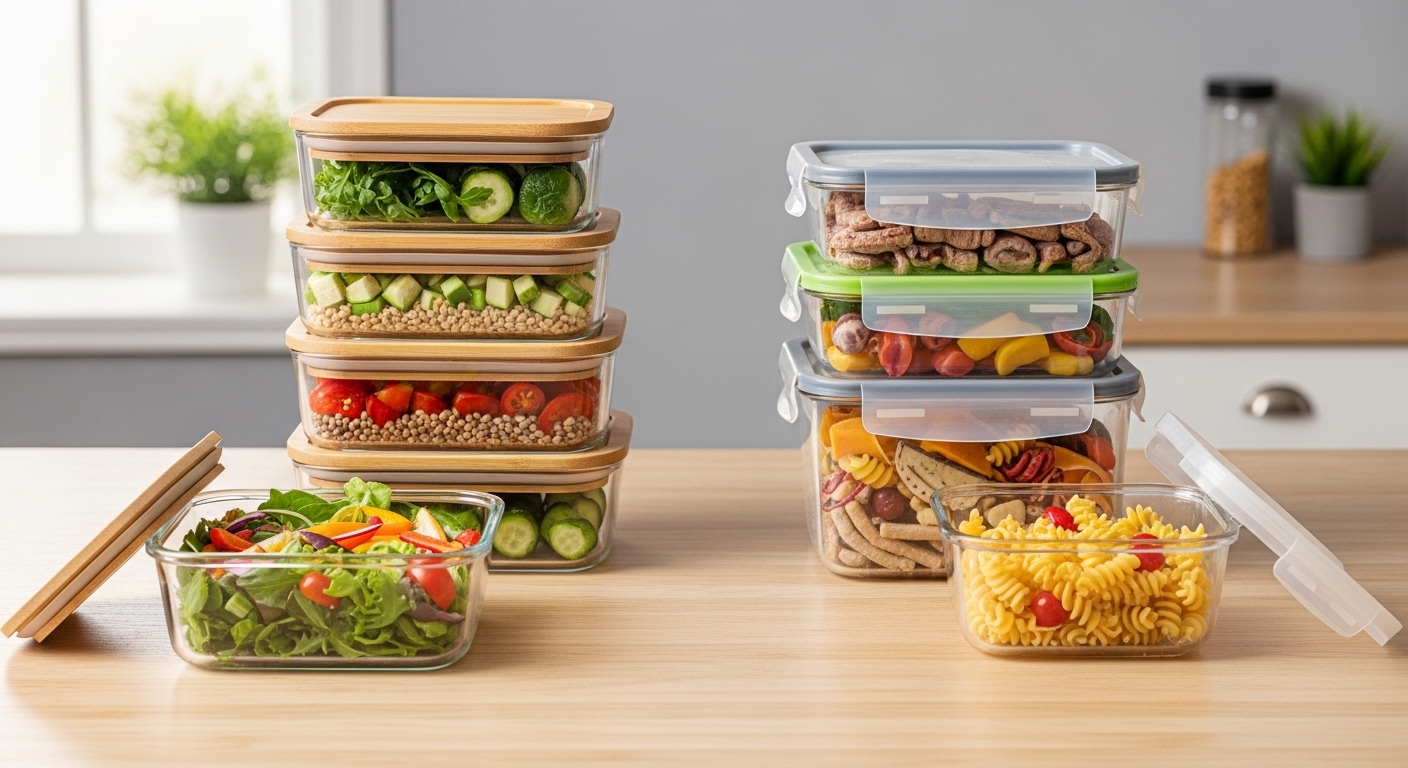
Food containers seem simple—until you’ve dealt with tomato stains, lingering curry smell, lids that warp, or a lunch that tastes faintly like last week’s garlic. The real question isn’t “which is better?” but which fits your routine: daily meal prep, leftovers, freezer storage, commuting, or reheating at work.
Below is a clear comparison of glass vs plastic containers, with pros/cons and a practical “best choice” at the end.
Quick summary (what each does best)
Glass containers = best for taste + stain/smell resistance + reheating
Plastic containers = best for lightweight + drop resistance + budget + bulk meal prep
1) Taste & smell (the “does my food taste weird?” factor)
Glass ✅
- Neutral taste: doesn’t absorb odors or flavors.
- Great for strong foods: curry, garlic, kimchi, tomato sauce.
- After washing, glass usually comes out truly clean.
Glass downside: lids (usually plastic/silicone) can still hold odor if not washed well.
Plastic ❌ (varies by quality)
- Plastic can hold smells over time (onion, garlic, spices).
- Some foods taste “muted” or pick up a faint plastic smell after repeated use.
- Tomato-based sauces and turmeric can stain permanently.
Plastic advantage: good-quality plastic is better than cheap plastic here, but it rarely matches glass long-term.
Winner: Glass (especially if you store flavorful foods often)
2) Durability & daily abuse (drops, dents, and real life)
Plastic ✅
- Drop-proof in most everyday scenarios.
- Great for commuting, kids’ lunches, and busy kitchens.
- Less stressful to toss in bags or stack in drawers.
Plastic downside: can scratch, warp, and haze over time—especially with heat.
Glass ✅/❌
- Glass doesn’t warp or scratch easily, and it stays looking new.
- But it can chip or break if dropped on tile.
- Heavier = more likely to slip if you’re juggling things.
Winner: Plastic for rough daily use / Glass for “stays nice” durability
3) Microwave safety & reheating quality
Glass ✅
- Generally the best for reheating: even heat, stable shape, and less worry about warping.
- Food tends to reheat more “like real leftovers” (less uneven hot spots).
Glass note: lids are usually not meant for high heat. Many people vent the lid or set it on top loosely.
Plastic ✅/❌
- Many plastics are labeled microwave-safe, but:
- Some warp after repeated heating.
- Saucy/greasy foods can heat intensely and accelerate wear.
- It’s more likely to stain and hold odors when microwaved.
Practical safety tip: regardless of container type, avoid microwaving with the lid sealed. Steam pressure + heat is rough on lids.
Winner: Glass (better performance and long-term reliability)
4) Freezer performance (ice, cracks, and “freezer smell”)
Plastic ✅
- Excellent freezer choice: won’t crack easily from expansion.
- Lightweight and easy to stack.
- Great for bulk freezing soups, rice, portions.
Glass ✅/❌
- Freezer-safe glass can be great, but it’s more delicate:
- Sudden temperature changes can be risky.
- Overfilling can lead to cracking if contents expand.
Winner: Plastic for heavy freezer use (glass is fine if you’re careful)
5) Cleaning & maintenance
Glass ✅
- Easier to fully “reset” to clean.
- Doesn’t stain easily; dishwasher-friendly for the container itself.
Glass downside: lid grooves and seals still need attention.
Plastic ✅/❌
- Easy to wash, but stains/smells can linger.
- Dishwasher heat can warp lids over time.
Winner: Glass (less lingering smell/stain)
6) Weight, storage, and convenience
Plastic ✅
- Lighter for lunch bags.
- Easier to store in bulk sets.
- Better for kids or on-the-go.
Glass ❌
- Heavier and takes up more space.
- Not ideal if you carry meals daily and hate extra weight.
Winner: Plastic (for portability and bulk storage)
7) Long-term value (what saves money over time?)
Glass ✅ (often better long-term)
- The container usually lasts longer without staining/warping.
- Better for people who cook often and store flavorful foods.
Plastic ✅ (better short-term value)
- Cheaper upfront, easy to buy in big sets.
- Perfect if you lose containers, send leftovers home with friends, or want a lot of matching boxes.
Long-term value “truth”:
- If you microwave daily + store saucy foods → glass tends to win over time
- If you need lots of containers + don’t baby them → plastic is more practical
Head-to-head verdict: Which is the optimal choice?
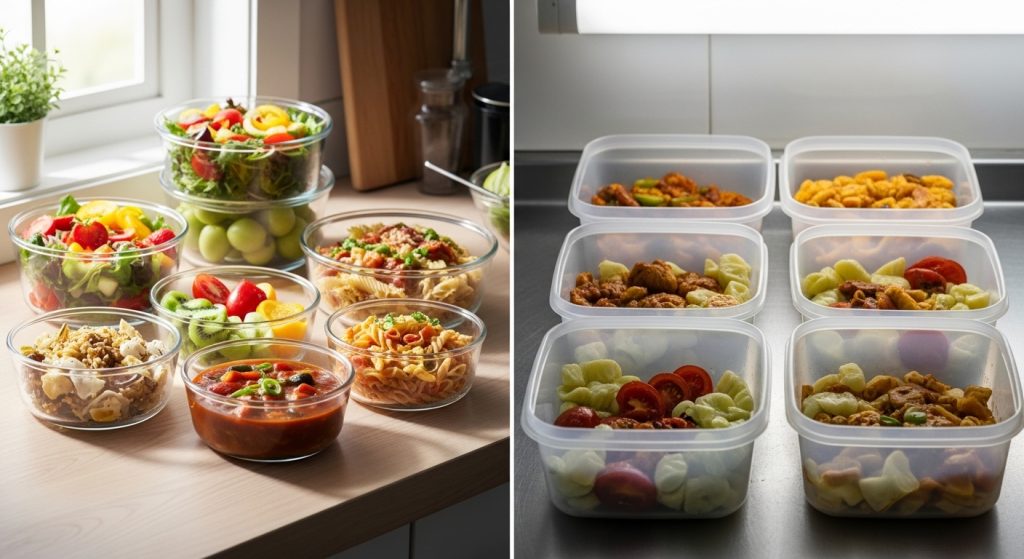
✅ Best overall for most home cooks: Glass containers (with good lids)
If you want the best combination of taste, cleanliness, microwave performance, and long-term quality, glass is the better everyday choice—especially for meal prep and leftovers.
✅ Best for convenience and bulk meal prep: Plastic containers
If you prioritize lightweight, drop resistance, freezer stacking, and budget, plastic is the better choice—especially for big batch prep or taking food to work/school.
The best “real-life” strategy (what many people end up doing)
Use both:
- Glass for: reheating, saucy meals, strong-smelling foods, home leftovers
- Plastic for: freezer portions, kids’ lunches, commuting, and “bring-back-never” containers
Final recommendation
If you want one type that feels like the best long-term upgrade, choose glass—it keeps food tasting clean, reheats better, and stays nicer for longer.
But if your lifestyle is rough on containers (work lunches, kids, freezer batches), plastic is the most practical and forgiving option.
If you want, tell me your routine (solo vs family, microwave daily or not, freezer use, commute) and I’ll recommend a simple “container setup” that fits without overbuying.